
Landscape lighting cost in the Des Moines area and how to plan a system
Landscape lighting cost in Des Moines starts from a national average of about $3,500, with most professional installs landing between $2,100 and $4,900, according to Lawn Love's cost guide. Installed fixtures run $100 to $200 each. Your final number depends on how many lights you need, the fixture types, and how much cable has to go underground.
The short answer
Most homeowners pay $2,100 to $4,900 for professional landscape lighting, with a national average of $3,500 (Lawn Love). A 10 to 20 fixture system runs about $1,000 to $2,000, and 20 to 40 fixtures runs $2,000 to $5,000. Extra costs can include a $200 to $500 design fee, trenching at $5 to $13 per linear foot, and a $250 to $400 outdoor GFCI outlet.
How much does landscape lighting cost in Des Moines?
Lawn Love's cost guide puts the national average for landscape lighting at $3,500, with a typical range of $2,100 to $4,900 and $100 to $200 per installed fixture. The number of fixtures drives most of the price, followed by trench length.
The Lawn Love landscape lighting cost guide (updated December 27, 2025) breaks the price down by system size. A front walk with a few uplights on the house sits near the top of the table, and a whole property with driveway, patio, trees and fire pit sits near the bottom.
| System size | Typical installed cost | What that often covers |
|---|---|---|
| 10 to 20 fixtures | $1,000 to $2,000 | Front walk, entry steps, a few uplights on the house |
| 20 to 40 fixtures | $2,000 to $5,000 | Front and back yards, trees, patio edges |
| 40 or more fixtures | $5,000 to $7,000 or more | Whole property, driveway, outdoor living areas |
| Per installed fixture | $100 to $200 | Fixture, lamp, cable run and labor |
Source: Lawn Love, landscape lighting cost guide, updated December 27, 2025. National figures, not Andy's prices.
Several things push a Central Iowa job up or down from those ranges. Long cable runs across a big lot in Waukee or Grimes cost more than a compact city yard. Heavy clay, slopes, tree roots and tight side yards slow trenching. A missing outdoor outlet means an electrician visit. Andy's gives a free on-site estimate, so you get a number for your own yard instead of a national average.
What does each type of light fixture cost?
Per-fixture prices from Lawn Love range from about $50 for a basic path or wall light to $900 for a bollard. Most yards use a mix: path lights on walkways, uplights on trees and the house, and a few specialty fixtures near patios. Here is what each type costs and where it fits.
Path lights
Path lights cost $50 to $150 each, per Lawn Love. They sit on short stems along walkways, garden beds and driveway edges and throw light down onto the ground. Spacing matters more than brightness: too close and the walk looks like a runway, too far apart and you get dark gaps where someone can trip. Staggering them on both sides often looks better than lining one edge.
Uplights
Uplights run $100 to $400 per fixture. They sit at ground level and aim up at a tree trunk, a stone column or the front of the house. Bigger trees may need two or three uplights from different angles so the canopy doesn't look flat. On the house, they also make house numbers easier to read at night.
Downlights
Downlights cost $100 to $350 each. They mount high, usually in a tree or under an eave, and aim down to create a soft pool of light on a patio, lawn or seating area. Mounted in a tree, they cast branch shadows on the ground, a look often called moonlighting.
In-ground well lights
In-ground well lights run $85 to $250 each. The fixture sits flush with the ground, which keeps it out of the way of mowers and foot traffic. They work for uplighting a wall, a column or a small tree in a lawn area. In Iowa, a well light needs good drainage below it, since water that collects in the housing can freeze. Gravel under the fixture helps.
Wall lights
Wall lights cost $50 to $250, according to Lawn Love. This group covers small fixtures set into retaining walls, seat walls and step risers. They light the face of a step or the top of a wall cap, which is where people misjudge their footing at night. On a new wall, plan the wire runs before the block goes up.
String lights
String lights run $80 to $300 per installed fixture. They hang over patios, pergolas and outdoor dining areas and give a casual glow for evenings outside. Most plug into a weather-rated outlet rather than a low-voltage transformer, and many Iowa families take them down before heavy snow and ice.
Bollards
Bollards are the most expensive fixture on the list at $250 to $900 each. They are short, sturdy posts, often 2 to 3 feet tall, that light a driveway entrance, a long path or the edge of a parking pad. Their size makes them easier to see under light snow than a short path light, but they still need to sit back from the plow line.
Solar, low-voltage or hardwired: which system fits your yard?
Most professional installs use low-voltage lighting at $100 to $150 per fixture, per Lawn Love. Solar lights cost $50 to $200 each and skip wiring, but they depend on sunshine. Hardwired 120-volt lighting is less common in yards and needs an electrician. Here is how the three compare.
Solar lights
Solar lights cost $50 to $200 per light and need no cable, trench or transformer. Each fixture charges a small battery during the day. The trade-off in Iowa is winter: short, cloudy December days mean less charge, and a panel covered in snow doesn't charge at all. Solar works for accent lights in a sunny bed, but for lights every night all year, most homeowners choose low-voltage.
Low-voltage systems
A low-voltage system runs from a transformer that plugs into an outdoor outlet and steps household 120-volt power down to 12 volts, per Lawn Love. Low-voltage fixtures run $100 to $150 each installed. The lower voltage makes the cable safer to bury in a yard, and fixtures can be moved later as plants grow.
Hardwired 120-volt lighting
Hardwired lights run on full household voltage and are usually wired by a licensed electrician. Lawn Love lists electrician rates at $45 to $100 per hour. Hardwired fixtures make sense for post lanterns, garage lights and fixtures attached to the house.
LED bulbs
LED is the standard choice for new systems. Lawn Love lists LED bulbs at $2 to $8 each and calls them the most efficient option. Lower power draw per fixture means one transformer can run more lights, which can mean fewer transformers on a big lot.
What else shows up on a lighting quote?
Beyond fixtures, a quote can include a design fee of $200 to $500, trenching at $5 to $13 per linear foot, a new GFCI outdoor outlet at $250 to $400, and electrician time at $45 to $100 per hour, all from Lawn Love. Not every job needs every line item, so ask which ones apply to your yard.
The design fee pays for a lighting plan: where each fixture goes, which way it aims, and how the cable runs back to the transformer. On a bigger yard project, the lighting layout can be part of the overall plan, and Andy's landscape design service includes design sketches with each consultation.
Trenching changes the most from yard to yard. A short front walk near the transformer needs little cable, while a run that crosses the driveway and reaches a backyard fire pit needs much more. At $5 to $13 per linear foot, every extra 50 feet of trench adds about $250 to $650.
How do you plan a landscape lighting system?
Planning a lighting system takes four steps: walk the yard after dark, list what you want lit, place the transformer near an outdoor GFCI outlet, and split the lights into zones on timers. Doing this first makes quotes easier to compare.
Walk the yard at night
Go outside an hour after sunset and walk the paths you actually use: car to front door, back door to patio, patio to the garage or shed. Note where you slow down because you can't see the ground. Look at the house from the street, and note where a streetlight already covers part of the yard.
List what to light
Write down the spots that matter. For most Des Moines area homes, the list looks like this:
- Walkways from the driveway to the front door
- Steps, both front and back, including deck stairs
- The front of the house and the house numbers
- Trees and larger shrubs you want to see at night
- The patio, fire pit and outdoor kitchen areas
Place the transformer near an outdoor GFCI outlet
The transformer plugs into an outdoor GFCI outlet and mounts on the house or a post nearby. Pick a spot central to the lights you listed. If the only outlet is on the wrong side of the house, compare the cost of a new outlet ($250 to $400 per Lawn Love) against the extra trenching and cable to reach the far lights.
Set up zones and timers
Zones let you run groups of lights separately. A common setup puts the front walk and house front on one zone and the backyard patio and fire pit on another. Most transformers include a timer or a photocell that turns lights on at dusk. The backyard zone can run only when you are outside.
How do Iowa winters change landscape lighting cost in Des Moines yards?
Iowa winters add three problems national cost guides don't price in: snow plows and shovels hitting fixtures near the driveway, frost heave lifting stake-mounted lights, and long nights that make lighting run more hours. Planning for these up front costs less than replacing broken fixtures each spring.
West Des Moines lists a frost depth of 42 inches, a winter design temperature of minus 5 degrees and a "severe" weathering rating in its adopted code design criteria. Ground that freezes and thaws over and over pushes stakes up, tilts fixtures and pulls shallow cable toward the surface.
Snow, plows and driveway edges
Path lights and bollards set right at the edge of a driveway are the first to get hit by a plow blade, a snowblower or a pile of heavy, wet snow. Set driveway fixtures back from the pavement edge, or use in-ground well lights where a raised fixture would be in the way.
Frost heave and stake-mounted fixtures
Most path lights and spotlights sit on plastic or metal stakes pushed into the soil. In Central Iowa clay, freeze-thaw cycles can lift those stakes over a winter, leaving fixtures leaning by March. Gravel around the stake helps water drain, and a spring check to reset fixtures keeps them straight.
Cable depth and calling 811
Low-voltage cable gets buried in a shallow trench, and the depth should follow the fixture maker's instructions and local rules; ask your installer what depth they use and why. Before any trench goes in, Iowa law requires a call to 811 at least 48 hours ahead, not counting weekends and holidays, per Iowa One Call. The request is free, and the locate ticket is good for 25 days. Confirm your contractor made the call.
Long Iowa winter nights mean lights run more hours from November through February. A dusk-to-midnight timer on the front zone covers the hours people come and go.
Which outdoor projects pair well with lighting?
Lighting adds the most when it goes in with a patio, walkway, fire pit or outdoor kitchen, because the cable can run under the new hardscape before it is finished. That means less trenching and fewer patches than retrofitting later.
A new walkway is the easiest place to start. Path lights or step lights set during a stone walkway installation can share the same excavation. Our guide to walkway cost in Des Moines covers paver and stone prices.
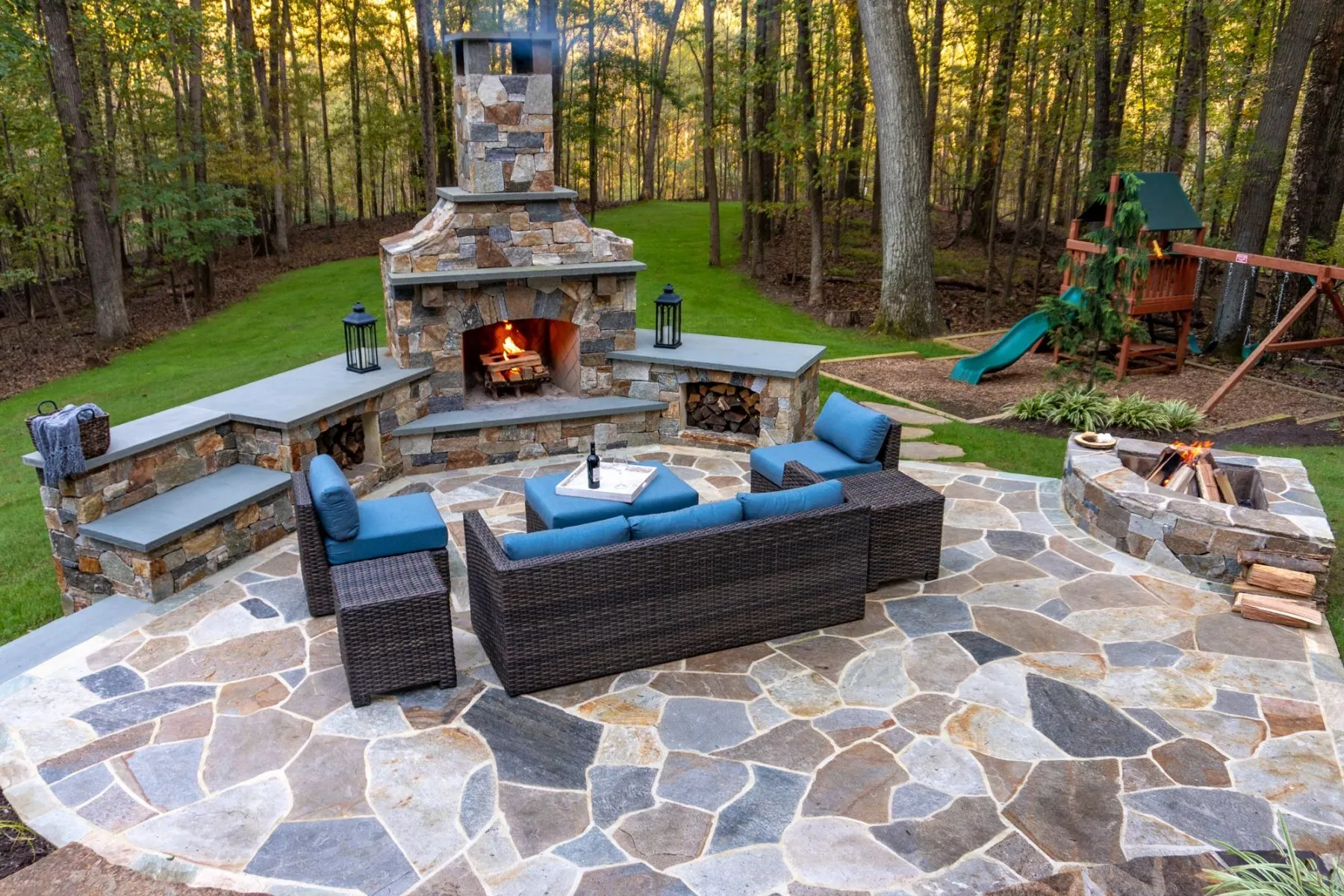
Patios get the most use after dark in summer. Downlights from a nearby tree, wall lights in a seat wall, or string lights overhead all work, and the cable for each can run under the base during patio installation. A fire pit needs only low path lights on the route from the house. Andy's handles fire pit installation, and the fire pit rules and cost guide for the Des Moines metro covers setbacks from the house and property line.
Outdoor kitchens need task lighting over the grill and counter, plus lower lights around the edges. Plan both during the build of your outdoor kitchen, since running cable later means cutting into finished work. Deck stairs are another spot where step lights prevent falls, and the deck cost guide for Iowa lists West Des Moines stair rules if you are building new.
How do you find outdoor lighting installers near you?
Searching "outdoor lighting installers near me" anywhere in the Des Moines metro brings up electricians, lighting specialists and landscape contractors. A landscape contractor plans lighting with the plantings and hardscape, while an electrician handles any new outlet or hardwired fixture.
Andy's Landscape & Hardscape Services, based at 705 Northview Drive in Dallas Center, offers landscape lighting installation across Dallas, Polk and Guthrie counties. The process starts with a walk of your property, then a design with layout, fixtures and a cost estimate, then the install and a final walkthrough with upkeep tips.
Andy's works in towns including Polk City, Clive, Granger, Ankeny, Waukee and Johnston, plus West Des Moines, Urbandale and Adel. Before you hire anyone, check that they are registered with the Iowa Division of Labor, a requirement for anyone earning $2,000 or more a year from construction in Iowa. One customer, Kristi Tracy, wrote in a Google review: "Always there when he says he will be!"
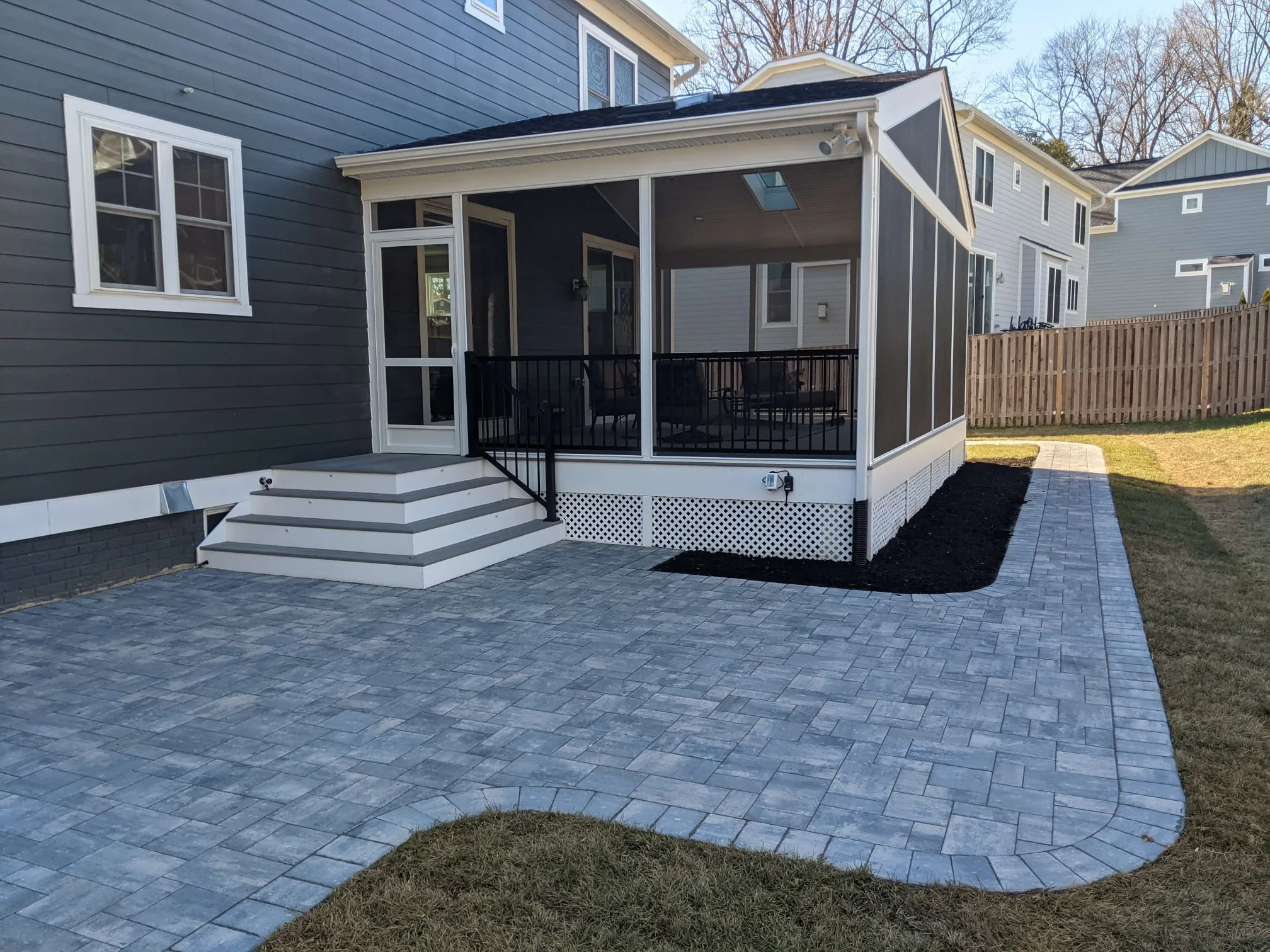
To get a number for your own yard, write down your list of spots to light and request a free on-site estimate from Andy's. Mention any planned patio, walkway or fire pit so the cable is planned once.
Frequently asked questions
How much is landscape lighting for an average house?
Lawn Love's cost guide puts the national average at $3,500, with most homeowners paying $2,100 to $4,900. A smaller system of 10 to 20 fixtures runs about $1,000 to $2,000. Your price in the Des Moines area depends on fixture count, fixture types, trench length and whether you need a new outdoor outlet.
How much does one landscape light cost to install?
Lawn Love lists $100 to $200 per installed fixture, and $100 to $150 for a low-voltage fixture. By type, path lights run $50 to $150, uplights $100 to $400, well lights $85 to $250 and bollards $250 to $900. The price per light includes the fixture, cable and labor to set it.
Are solar landscape lights worth it in Iowa?
Solar lights cost $50 to $200 each and need no wiring, but they rely on daily sun to charge. Short, cloudy winter days and snow on the panels cut their run time in Iowa. They work for a few accent lights. For lights that come on every night all year, low-voltage is the usual choice.
Do I need an electrician for low-voltage landscape lighting?
A low-voltage transformer plugs into an outdoor GFCI outlet, so many systems need no electrician at all. If your house lacks an outdoor outlet in the right spot, an electrician adds one, which Lawn Love prices at $250 to $400. Electricians charge $45 to $100 per hour for that work.
Do I need to call 811 before installing landscape lighting?
Yes, if anyone will trench or dig. Iowa law requires a call to 811 at least 48 hours ahead, not counting weekends and holidays. The request is free, and the locate ticket is good for 25 days. Ask your contractor to confirm they called before trenching starts in your yard.
How do I keep landscape lights from breaking in winter?
Keep path lights and bollards back from the driveway edge, where plows and snowblowers hit them. Use in-ground well lights where a raised fixture would be in the way. Check stake-mounted fixtures each spring, since freeze-thaw cycles in Central Iowa clay can lift and tilt them over the winter.
Get a lighting plan and price for your Des Moines area yard
Andy's walks your property, maps out where each fixture should go, and gives you a free estimate based on your actual fixture count and cable runs. Lighting can also be planned with a new patio, walkway or fire pit so the cable goes in once.
Sources
